
Virtual Influencers: Determining If They're a Passing Trend or Strategic Long-Term Investment
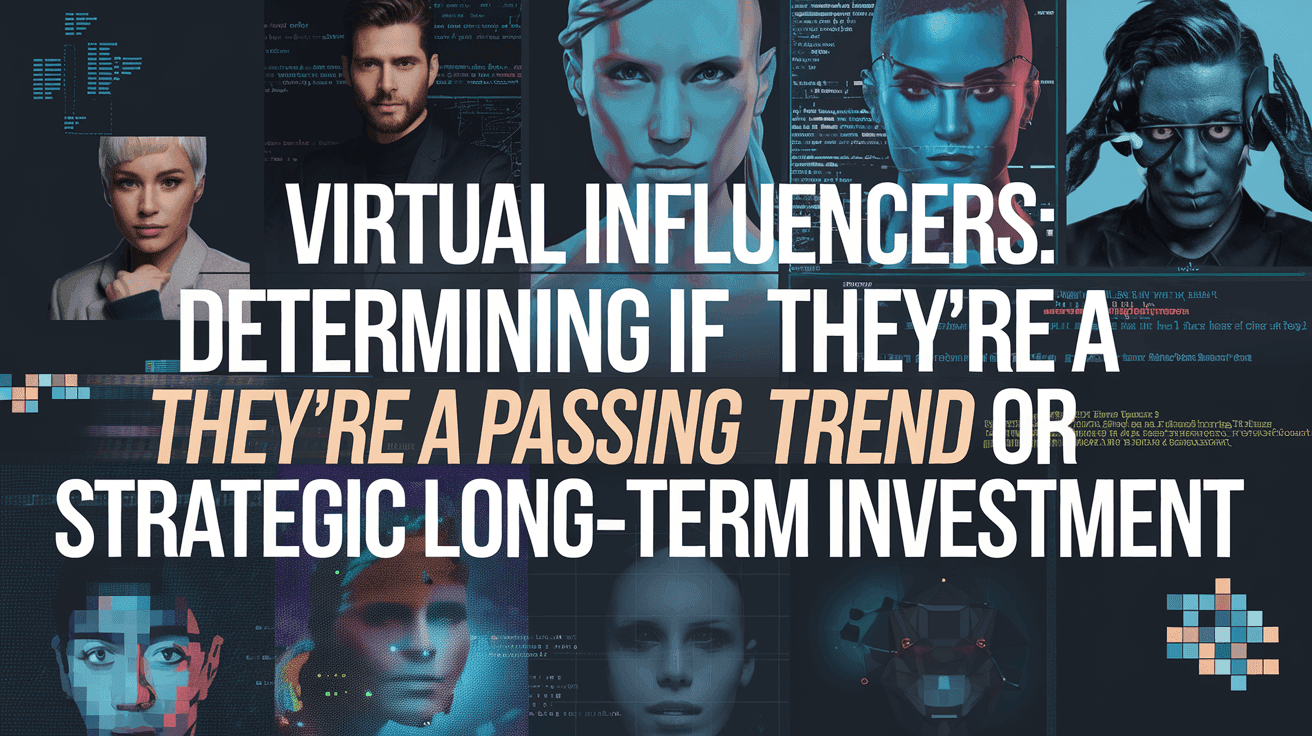
Table Of Contents
- Understanding Virtual Influencers: The Digital Personalities Reshaping Influence
- The Current State of Virtual Influencers in Marketing
- Advantages of Virtual Influencers for Brands
- Limitations and Challenges in the Virtual Influencer Space
- ROI Analysis: Measuring the Impact of Virtual Influencers
- Future Trajectory: Where Virtual Influencers Are Headed
- Strategic Considerations for Brands Exploring Virtual Influencers
- Conclusion: Hype or Long-Term Bet?
Virtual Influencers: Determining If They're a Passing Trend or Strategic Long-Term Investment
The marketing world is witnessing a fascinating evolution in the influencer landscape – the rise of virtual influencers. These digital personalities, from Lil Miquela with her 3 million Instagram followers to Lu do Magalu who helps drive billions in sales for a Brazilian retailer, are challenging our understanding of authenticity, engagement, and brand partnerships in the digital age. As these computer-generated characters continue gaining traction and attracting significant investment from major brands, marketers are faced with an important question: Are virtual influencers simply a technological novelty riding a wave of hype, or do they represent a fundamental shift in how brands connect with audiences?
This question becomes particularly relevant as companies evaluate their influencer marketing strategies. With budgets tightening and ROI scrutiny increasing, determining whether virtual influencers deserve a place in your marketing mix requires careful analysis. In this article, we'll dive deep into the current state of virtual influencers, explore their advantages and limitations, examine their performance metrics, and help you determine whether they represent a passing trend or a worthwhile long-term investment for your brand's influencer strategy.
Virtual Influencers: Trend or Strategic Investment?
Analyzing the future of digital personalities in marketing
Current Market
Valued at $4.6 billion in 2022, projected to reach $15+ billion by 2030. Popular examples include Lil Miquela (3M followers) and Shudu.
Key Advantages
- Complete brand control with no risk of scandals
- Creative flexibility beyond human limitations
- 24/7 availability for consistent content
- Precise audience targeting with customizable traits
Limitations
- Authenticity concerns in an authenticity-driven market
- High development costs ($10K-$100K+ initial investment)
- Ethical & transparency challenges requiring clear disclosure
- Limited emotional connection compared to human influencers
ROI Insights
Performance metrics show:
- Engagement rates up to 3x higher than human influencers
- Brand awareness lift 8-12% higher than standard campaigns
- Innovation perception improved by 15-20% in some cases
Future Trajectory & Strategic Considerations
Technology Evolution
AI integration enabling greater autonomy and metaverse/XR compatibility will expand capabilities and use cases.
Strategic Approach
Consider brand alignment, build vs. partner decisions, and integration with human influencer strategies.
Long-Term Viability
Success requires sustained investment in character development and content creation with careful risk management.
The Verdict
Virtual influencers represent a legitimate marketing strategy for brands with forward-looking positioning and audiences receptive to digital-first experiences. Most effective when used as specialized tools within a broader marketing arsenal.
Optimize your influencer strategy with StarNgage Pro
Understanding Virtual Influencers: The Digital Personalities Reshaping Influence
Virtual influencers are computer-generated characters designed with distinct personalities, backstories, and visual identities. Unlike their human counterparts, these digital entities exist solely in the digital realm, created through sophisticated 3D modeling, animation, and increasingly, artificial intelligence. The teams behind them carefully craft posts, interactions, and narratives to develop their personas and engage with followers.
The concept might seem futuristic, but virtual influencers have already established significant presences across social media platforms. Lil Miquela (created by Brud) has collaborated with brands like Calvin Klein and Prada. Shudu, known as the world's first digital supermodel, has been featured in Vogue and worked with Fenty Beauty. Meanwhile, KFC's virtual Colonel Sanders and Dayzee (Yoox's virtual model) demonstrate how brands are creating their own digital ambassadors.
What distinguishes these virtual personalities is their ability to blend fiction with reality in ways that resonate with modern audiences. They post about everyday activities, share opinions on current events, and interact with followers in ways that mirror human influencers – all while maintaining the perfect balance of aspirational yet relatable content that brands covet.
The Current State of Virtual Influencers in Marketing
The virtual influencer market has experienced remarkable growth in recent years. According to industry reports, the global virtual influencer market was valued at approximately $4.6 billion in 2022 and is projected to reach over $15 billion by 2030. This growth trajectory reflects increasing brand adoption and consumer acceptance of these digital personalities.
Several key factors are driving this expansion:
-
Gen Z and Millennial engagement – Younger audiences have demonstrated particular receptiveness to virtual influencers, appreciating their innovative nature and often distinctive aesthetic.
-
COVID-19 acceleration – The pandemic highlighted the resilience of virtual influencers, who could continue creating content without interruption while human influencers faced logistical challenges.
-
Technological advancements – Improvements in CGI, motion capture, and AI have made virtual influencers increasingly realistic and dynamic, enabling more sophisticated content creation.
-
Cross-platform versatility – Virtual influencers can seamlessly appear across different media channels, from social media to virtual events, games, and metaverse experiences.
Brands across diverse sectors have embraced virtual influencers. Luxury fashion houses like Balmain have created virtual models for their digital army, while Samsung developed Sam as a virtual assistant that quickly gained internet popularity. Even conservation organizations have created virtual influencers like Pangea to raise awareness about environmental issues.
In Asia, particularly in countries like China, Japan, and South Korea, virtual influencers have achieved mainstream status. For example, virtual KOLs (Key Opinion Leaders) like Ling and Ayayi have attracted millions of followers and secured partnerships with major brands like Alibaba and Louis Vuitton.
Advantages of Virtual Influencers for Brands
Virtual influencers offer several distinct advantages that explain their growing appeal among marketers and brand strategists:
Complete Brand Control
Perhaps the most significant benefit is the unprecedented level of control brands gain over their messaging. With virtual influencers, there's no risk of controversial personal behavior, off-brand statements, or scandals that might jeopardize partnerships with human influencers. Every aspect of the virtual personality, from appearance to values and content, can be precisely aligned with brand positioning and campaign objectives.
Creative Flexibility
Virtual influencers transcend human limitations. They can appear in multiple locations simultaneously, promote products in impossible scenarios, and create content that would be logistically challenging or prohibitively expensive with human influencers. This opens new creative possibilities for storytelling and product showcasing.
Consistent Availability
Production schedules aren't constrained by human factors like illness, travel complications, or personal emergencies. Virtual influencers can maintain consistent posting schedules and are available for campaign adjustments or content creation at any time, streamlining campaign execution and potentially reducing production timelines.
Precise Audience Targeting
Virtual influencers can be designed specifically to appeal to particular demographic segments or niche communities. Their interests, aesthetic, and personality traits can be crafted to resonate with target audiences in ways that might be difficult to find in a single human influencer.
Novelty and Innovation Factor
Brands working with virtual influencers often benefit from the perception of being forward-thinking and innovative. The technology itself becomes part of the brand narrative, potentially generating additional media coverage and audience engagement through the novelty factor.
Long-Term Investment Potential
While development costs can be significant initially, virtual influencers represent potentially valuable intellectual property that brands can leverage indefinitely. Unlike partnerships with human influencers that require ongoing negotiation and increasing fees as popularity grows, virtual influencers can provide more predictable long-term cost structures once created.
Limitations and Challenges in the Virtual Influencer Space
Despite their advantages, virtual influencers come with significant limitations and challenges that brands must carefully consider:
Authenticity Concerns
The fundamental paradox of virtual influencers is their inherent inauthenticity in a marketing landscape where authenticity is increasingly valued. While some audiences embrace the fictional nature of these characters, others may find the manufactured personas less trustworthy or relatable compared to human influencers with lived experiences.
Development and Maintenance Costs
Creating high-quality virtual influencers requires substantial investment in design, animation, and content creation. Depending on the complexity and realism desired, initial development costs can range from tens to hundreds of thousands of dollars. Ongoing maintenance and content production also require specialized technical skills and resources that may exceed traditional influencer partnership budgets.
Ethical and Transparency Issues
The virtual influencer space faces evolving ethical questions around disclosure, representation, and potential manipulation. Brands must navigate transparency expectations regarding the fictional nature of these characters and consider how their portrayal of certain identities or experiences might be perceived. Without proper disclosure, consumers might feel misled about the nature of the content they're engaging with.
Limited Emotional Connection
While technology continues to advance, virtual influencers still struggle to replicate the emotional depth and genuine human connection that authentic human influencers can establish with their audiences. This limitation may impact the effectiveness of campaigns requiring strong emotional resonance or personal testimony.
Regulatory Uncertainty
As virtual influencers become more prevalent, regulatory bodies are beginning to take notice. The lack of clear guidelines specifically addressing virtual influencers creates uncertainty around disclosure requirements, advertising standards, and intellectual property rights that may affect campaign implementation.
Cultural Adaptation Challenges
Virtual influencers must be carefully designed to navigate cultural sensitivities and local contexts, particularly for global brands. Missteps in how these digital personalities are portrayed or what they promote can lead to backlash that's amplified by their artificial nature.
ROI Analysis: Measuring the Impact of Virtual Influencers
Evaluating the return on investment for virtual influencer initiatives requires consideration of both standard performance metrics and unique factors specific to these digital personalities.
Engagement Metrics
Data from several campaigns suggests that virtual influencers can generate engagement rates comparable to or sometimes exceeding those of human influencers. For instance, research from HypeAuditor found that some virtual influencers achieve engagement rates up to three times higher than the average for human influencers in similar categories. This performance advantage is often attributed to the novelty factor and distinctive visual aesthetic that stands out in crowded feeds.
However, these metrics should be analyzed in context. The higher engagement may partially reflect curiosity rather than genuine connection with the content, potentially diminishing as the novelty effect wears off.
Conversion Performance
When it comes to driving conversions, the picture becomes more nuanced. While comprehensive industry-wide data remains limited, case studies present mixed results:
- Luxury and technology brands report strong performance from virtual influencer partnerships, with conversion rates sometimes outperforming traditional influencer campaigns.
- Categories relying heavily on personal testimony or product experience, such as beauty or wellness products, generally see more modest conversion metrics compared to human influencer benchmarks.
Brand Lift Metrics
Virtual influencers often excel in driving brand awareness and perception metrics. Campaigns featuring these digital personalities have demonstrated significant impacts on:
- Brand recall (typically 8-12% higher than standard digital campaigns)
- Perception of brand innovation (15-20% improvement in some documented cases)
- Media coverage and earned media value
These broader brand benefits should be factored into ROI calculations alongside direct response metrics.
Total Cost Considerations
The comprehensive cost structure for virtual influencers differs substantially from human partnerships:
- Initial development: $10,000-$100,000+ depending on complexity
- Content creation: $2,000-$15,000 per post (including design, animation, and narrative development)
- Platform and technology costs: Varies based on implementation
- Potential licensing revenue and IP value appreciation
When evaluated through a Creator CRM platform, the long-term economics can become favorable for brands with sustained commitment to their virtual influencer strategy, particularly when the character becomes a proprietary brand asset.
Future Trajectory: Where Virtual Influencers Are Headed
The evolution of virtual influencers is being shaped by several converging technological and market trends that offer insight into their future role in marketing:
AI Integration and Autonomy
The next generation of virtual influencers is moving beyond scripted content toward greater autonomy through AI integration. Advanced natural language processing and machine learning are enabling more dynamic interactions with audiences. Companies like BusinessPlusAI are developing technologies that could allow virtual influencers to respond to comments, participate in real-time conversations, and generate content with reduced human oversight. This evolution promises to address current limitations in responsiveness while potentially raising new questions about control and authenticity.
Metaverse and Extended Reality Integration
As metaverse platforms and extended reality technologies mature, virtual influencers are positioned to become natural inhabitants of these digital spaces. Virtual personalities can seamlessly transition between social media, virtual worlds, games, and augmented reality experiences, creating cohesive cross-platform narratives that human influencers cannot replicate. This versatility may become increasingly valuable as audiences distribute their attention across an expanding array of digital environments.
Hyper-Personalization and Audience Adaptation
Emerging technologies are enabling virtual influencers to adapt their appearance, content, and even personality traits based on audience data and preferences. This could lead to versions of virtual influencers customized for specific markets, campaigns, or even individual user interactions. Such capabilities would represent a significant advancement in targeted marketing but will require careful navigation of privacy expectations and personalization ethics.
Collaborative Virtual-Human Partnerships
Rather than competing directly with human influencers, we're seeing the emergence of collaborative models where virtual and human influencers interact within campaigns. These partnerships leverage the strengths of both approaches – the authenticity and emotional connection of human influencers alongside the creative flexibility and controlled messaging of virtual characters. This hybrid approach may represent a sustainable middle path for brands hesitant to commit fully to virtual influencer strategies.
Democratization of Creation Tools
As creation technologies become more accessible, the barrier to entry for developing virtual influencers is lowering. This democratization may lead to a proliferation of virtual personalities representing a wider range of creators, including smaller brands and independent artists. Tools from companies like HashMeta AI are making sophisticated AI and creation capabilities available to a broader market, potentially diversifying the virtual influencer landscape beyond major brand-backed characters.
Strategic Considerations for Brands Exploring Virtual Influencers
For brands considering investment in virtual influencers, several strategic factors should guide decision-making and implementation:
Brand Alignment Assessment
Before committing resources, evaluate how well virtual influencers align with your brand positioning, values, and audience expectations. Consider:
- Does your target audience demonstrate receptiveness to virtual personalities?
- Does innovation form a core component of your brand identity?
- Are there authentic storytelling opportunities that a virtual character could uniquely deliver?
Brands with technology-forward positioning or those targeting digitally native demographics typically find stronger alignment with virtual influencer strategies.
Build vs. Partner Decision Framework
Brands face a fundamental choice between creating proprietary virtual influencers or partnering with established digital personalities:
- Building proprietary characters offers complete control and long-term IP value but requires significant investment and expertise in development and ongoing content creation.
- Partnering with existing virtual influencers provides immediate access to established audiences and proven creative approaches with lower initial commitment.
Your decision should be guided by factors including available resources, timeline requirements, and strategic objectives. Utilizing AI Influencer Discovery tools can help identify potential virtual personalities that align with your brand values and audience demographics.
Integration with Broader Influencer Strategy
Virtual influencers typically perform best as one component within a comprehensive influencer marketing approach rather than as a standalone strategy. Consider how virtual personalities might complement human influencer partnerships by:
- Addressing specific campaign objectives where virtual influencers excel (creative storytelling, consistent messaging, etc.)
- Targeting particular audience segments or platforms
- Serving as brand-owned channels that can amplify and extend content from human influencer collaborations
Platforms like StarNgage Pro enable brands to manage both virtual and human influencer relationships within a unified framework, creating more cohesive campaign execution.
Long-Term Commitment Evaluation
Successful virtual influencer initiatives typically require sustained investment over time to build audience connection and brand association. Before launching, assess your organization's willingness to commit to:
- Ongoing content development and character evolution
- Consistent voice and personality maintenance across changing marketing priorities
- Technical updates as platform requirements and audience expectations evolve
Without this long-term commitment, the return on initial development investment may be limited.
Risk Mitigation Planning
Develop comprehensive contingency plans for potential challenges specific to virtual influencers:
- Content moderation protocols for AI-assisted interactions
- Crisis management procedures for negative audience reactions or ethical concerns
- Technical redundancies to ensure content delivery reliability
- Clear documentation of intellectual property rights and usage permissions
These proactive measures can help protect brand reputation while maximizing the potential benefits of virtual influencer initiatives.
Conclusion: Hype or Long-Term Bet?
The question of whether virtual influencers represent mere hype or a valuable long-term bet doesn't have a universal answer – it depends significantly on individual brand contexts, objectives, and audience relationships.
The evidence suggests that virtual influencers occupy a legitimate and potentially growing space in the marketing landscape, particularly for brands with:
- Forward-looking, innovation-focused positioning
- Target audiences receptive to digital-first experiences
- Content strategies that benefit from creative flexibility and consistent execution
- Long-term vision and commitment to character development
However, virtual influencers are unlikely to replace human influencers entirely. The authenticity, lived experiences, and genuine emotional connections that human creators provide remain powerful and irreplaceable for many campaign objectives. The most successful brands will likely adopt strategic approaches that leverage the unique strengths of both virtual and human influencers rather than viewing them as competing alternatives.
When evaluating virtual influencers for your brand, consider them as specialized tools within your broader marketing arsenal rather than as all-purpose solutions. Their effectiveness will be determined by how strategically you deploy them to address specific objectives where their unique capabilities provide genuine advantages.
As with many emerging marketing technologies, the distinction between hype and sustainable value lies not in the tool itself, but in how thoughtfully it's integrated into comprehensive strategies built on clear objectives, audience understanding, and authentic brand positioning.
Ready to optimize your influencer marketing strategy – whether with human creators, virtual personalities, or a strategic combination of both? StarNgage Pro provides the comprehensive tools and analytics you need to discover, manage, and measure performance across all your influencer relationships. From AI-powered discovery to sophisticated ROI tracking, our platform helps you build more effective, data-driven influencer programs. Visit StarNgage Pro today to learn how we can transform your approach to influencer marketing.